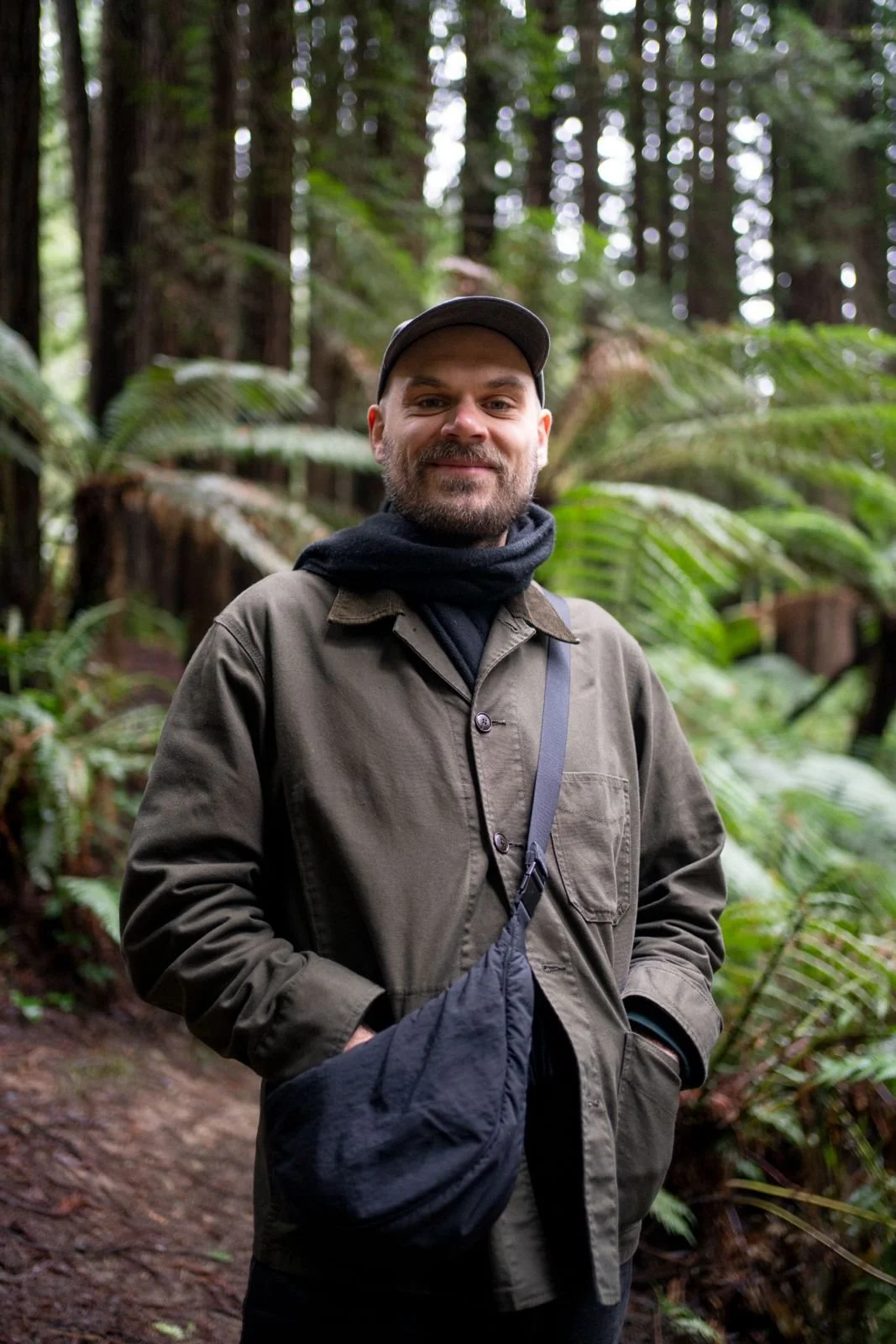
Hi, I’m Marcus, a Melbourne-based psychotherapist specialising in Emotion Focused Therapy.
Being a therapist isn’t just a job for me—it’s a way of being that is influenced by all that I am and all I have been.
I have always been naturally curious about the human psyche, existential dilemmas, and patterns of behaviour and attachment, even as a young child. Though I felt self-aware and sensitive to my internal life in my early years, as I moved through adolescence and into adulthood I increasingly encountered strange puzzles in my existence that I could not find answers for despite my endless searching, and was often left confused about why I had reacted or failed to react to what I faced in life. My emotions were often baffling to me and left me feeling stuck and overwhelmed. To protect myself from feeling them I hid behind my intellect and rational thought, which in effect cut me off from my body and the wisdom available in my somatic experience. As a result of this disconnection, I felt like a passive bystander in my life. Rather than seek support from others, I kept my concerns to myself and believed that I could find answers and fulfilment from various forms of escapism like work, study, creative pursuits, spirituality, and relationships; and these all worked to some degree to fill the void. However in my heart of hearts I knew that I was ultimately deeply disconnected from myself and creating the vital existence I wanted. Eventually I realised I couldn’t do it on my own any longer.
Then I tried something different by reaching out for help in therapy.
Within the safe and affirming therapeutic relationship with my therapist, I began to build self-awareness about how I was the way that I was, learn how my early influences had laid the blueprint for my unhelpful coping responses in the present, understand how my attachment style affected my present relationships, and comprehend how much of my way of being was based on fear and defence rather than love and openness. Through years of dedicated engagement in therapy I was able to begin my voyage of healing and transformation.
My goal as a therapist is to provide the same empathic, warm, authentic, affirming, safe, non-judgemental support and guidance to my clients.
My clinical experience covers working with a wide range of problems such as anxiety, depression, grief, addiction, trauma, obsessive-compulsive disorder, life transitions, existential questioning, and relational concerns. I strive to be affirming in my practice, particularly in relation to all aspects of identity—including cultural identity, neurodiversity, gender, disability, and sexuality. I bring to sessions not only this experience and my clinical expertise in psychology and psychotherapy, but also my humanity and lived experience as a fellow traveller on his own adventure of discovery in life. In our work together I will honour your own unique history and always allow you and your experience to guide us. This process is not about me being the expert giving you advice, but rather about helping you develop a deeper understanding of yourself, guiding you towards removing obstacles to growth, and not allowing you to get stuck in unhealthy patterns and emotions that keep you unhappy and disengaged.
I acknowledge that life is mysterious and we often don’t know where we are and where we are going; though from this state of ‘not knowing’ true meeting and presence can be born. From this wellspring, we can begin our therapy work.
Let’s discover the way forward together.
Areas of focus
I am most in my element helping people with the following concerns:
Anxiety
Depression
Relationship / interpersonal issues
Developmental & relational trauma (CPTSD)
Internal conflict: perfectionism, self-interruption, procrastination and self-criticism
Emotional and somatic dysregulation
Existential / life meaning / purpose concerns
Attachment wounds
Obsessive Compulsive Disorder (OCD)
Loneliness and disconnection
Low self-esteem and shame
Parts work
Inner child work
Qualifications and training
Master of Counselling and Psychotherapy:
The Cairnmillar InstituteEmotion Focused Therapy Level 1 & Level 2:
Australian Institute of Emotion Focused Therapy (AIEFT)Three Phased Approach for Working with Complex Trauma:
Blue KnotSkills-based Training on Suicide Risk Management (STORM):
Headspace
Professional memberships
Certified Practising Member:
Psychotherapy and Counselling Federation of Australia (PACFA)
[Registration Number: 29323]
How I work
A focus on emotion
My therapeutic approach is humanistic and person-centred at heart and has expanded recently to specialise in Emotion Focused Therapy (EFT).
EFT is an evidence-based, truma-informed psychotherapy approach that places emotion at the forefront of the human experience and psychological change process. It views emotions not as random events that happen to us, but rather as information-rich messengers alerting us to our need for safety, love, connection, and acceptance. Emotions can be healthy and adaptive or unhealthy and maladaptive depending on our experiences of them and how others have responded (or failed to respond) to them in the past. In therapy, simply talking about emotion or experiencing brief catharsis isn’t enough to bring lasting change—we must experience and engage with our emotional experiences fully, moving through them then making new meaning out of them. From this new foundation new ways of being in the world can arise, allowing you to escape your cyclical behavioural patterns with a new sense of agency and freedom.
This change process is enacted within a safe, affirming, and warm therapeutic relationship that allows you to feel understood, thus enabling you to fully explore your vulnerable emotions no matter how scary or dangerous they feel. As core emotional pain can often result from negative experiences with past attachment figures, the importance of the attachment relationship with me as your therapist is paramount, as it provides you with corrective emotional experiences that allow you to reconfigure your internal working model of self and your emotion schemes at a fundamental level.
EFT is informed by attachment theory, emotion theory, and affective neuroscience. It is evidence-based and has been shown to be effective with treating depression, anxiety disorders, complex trauma, and interpersonal concerns.
An integrative approach
Despite my focus on EFT, my approach is also integrative in that I see each client and their needs as unique, and I make sure that the therapeutic modality and interventions offered in our sessions are tailored specifically for you. As a result, my therapeutic style is informed by various other psychotherapy modalities such as:
Cognitive Behavioural Therapy (CBT)
Acceptance and Commitment Therapy (ACT)
Gestalt Therapy
Focusing-Oriented Psychotherapy
Psychodynamic Psychotherapy
Existential Psychotherapy
Somatic Psychotherapy
Sensorimotor Psychotherapy
Narrative Therapy
In addition to my psychotherapy training, I bring to sessions the combined wisdom and influence of eastern and western philosophy, Jungian psychology, Zen Buddhism, literature, film, and poetry. I meditate daily and aspire to practice mindful presence in every moment of my life—an attitude that I also bring to my psychotherapy practice.
Frequently asked questions
-
The fee for a 50-minute session is $140.
Psychotherapy and counselling sessions are not currently covered in the Medicare Better Care Initiative. As a result, you cannot claim a Medicare rebate from our sessions even if you have a mental health care plan.
-
I provide both in-person and online sessions:
In-person sessions are offered from my Thornbury location.
Online sessions are offered via Google Meet.
-
I offer in-person sessions from my Thornbury space on weekdays.
Online sessions are also available.
-
Psychotherapy, therapy and counselling are often used interchangeably to describe a type of psychological treatment in which an individual seeks professional assistance to help manage their emotional, cognitive, and behavioural mental health concerns and life struggles.
Some differentiate psychotherapy and counselling by specifying that counselling is a more general short-term treatment with a solutions-focused way of addressing and managing problems and life situations, while psychotherapy/therapy is a deeper long-term treatment which aims to help you better understand yourself, give insight into how the past has formed and influenced you, and assist you to change and grow into a wholly integrated person with a wider breadth of agency and choice when facing your life.
Psychology is the study of human cognition and behaviour. When clinically trained, psychologists can diagnose and treat mental health concerns and make formal assessments. They use psychotherapy to treat their clients, often mainly gravitating towards using therapeutic modalities such as Cognitive Behavioural Therapy (CBT) and Acceptance and Commitment Therapy (ACT), though they may also include integrative use of other modalities.
Psychiatry is a field of medicine focused on the diagnosis and treatment of mental health and behavioural disorders using medical interventions (such as medication) and psychotherapy.
-
Individuals often comes to therapy out of a sense of urgency that they can no longer cope with life alone any longer. A major event may have occurred leaving your life transformed (such as a death, a breakup, a job loss, a health scare), or you may be facing multiple stressors that have come at once leaving you feeling overwhelmed and paralysed. These major and minor stressors could be one of the following:
You may be struggling with unfulfilling interpersonal relationships with friends, partners, and family; or you may be lonely and disconnected from others and lack a sense of belonging.
You may be stuck in repeating the same negative patterns of behaviour that have kept you trapped your entire life.
You may feel that life is meaningless, that you wish to discover more purposeful existence.
You may be questioning your faith, or seeking a more spiritually aligned life.
You may dislike or even hate yourself, your personality, your appearance, your job, or others.
You may be stuck using unhealthy coping strategies or addictions that are severely limiting or harmful.
You may struggle with mental health concerns, such as anxiety or depression, but want to go beyond the “diagnosis” or surface level treatments to see what deeper influences drive these surface level global distress responses.
You may be haunted by your past traumas.
You may suppress all emotions and be completely closed off to others; or you may feel like emotions explode suddenly and are uncontrollable.
You may feel like you don’t know who you are, and that you wear a mask when interacting with others.
You may feel that you can never rest or switch off your thoughts, leaving you constantly exhausted and burned out.
Or you may simply feel that there must be more to life than just “this”.
All of these, and countless more, are great reasons to engage with therapy.
-
The honest answer is: it depends on the individual seeking therapy and their unique needs. For some, their immediate presenting problems may be explored and successfully worked through in 6 to 10 weekly or fortnightly sessions. For others, they may want to dig deeper into their concerns, engage in more comprehensive inner work, and move towards shifting deeply rooted maladaptive intra- and inter-personal emotional / behavioural / cognitive patterns. This type of therapy can last for 10+ sessions or as long as the individual requires support.
While the frequency of sessions depends on the client and the nature of the concern, I do recommend an initial commitment to six appointments preferably on a weekly or fortnightly basis.
-
Information discussed during our sessions is confidential and may not be shared with anyone without your written permission except when I am legally obliged:
to report a serious and imminent threat to the life, health or property of yourself or another
to report any abuse or neglect experienced by a young person under the age of 18 years, and/or
to release client records when required by court order.
Confidential written records are maintained to reflect the issues and goals identified in counselling sessions and are kept securely online for seven years.
-
You don’t require a GP referral nor a Mental Health Care Plan to engage in sessions with me.
-
The therapeutic relationship is one the most important factors contributing to a successful course of therapy. As such, finding the correct therapist fit for you and your needs is essential.
The best way of checking if I am right for you is to engage in a 15-minute consultation call with me prior to booking your first session to discuss your concerns, what you would like from therapy, and to get to know me and how I work. I offer this call free of charge.
-
Absolutely. For many engaging in therapy for the first time, the thought of sitting in front of a stranger and opening up about what is most painful, shameful and vulnerable can be a frightening prospect. However, this resistance and anxiety is to be expected. Therapy begins from square one by focusing on your needs and building the therapeutic relationship itself, which in turn provides you a sense of safety, calmness, and a feeling of being seen, heard and understood. From this safe base, trust slowly grows. When this foundation between therapist and their client is built, often within the first few sessions of therapy, the real work of therapy can begin.
Even when the therapeutic relationship is built, therapy isn’t always easy or comfortable work. You will touch upon things that cause you to feel anxious, fearful, emotional or hurt. You will want to run away at times. You will get stuck or feel like you are moving backwards. But the act of repeatedly and courageously turning up, facing and integrating parts of your self and seeking support is transformative. It is the act of becoming yourself.
-
Contact me via email or contact form to organise a free 15-minute introductory consultation phone call
Engage in a brief consultation phone call with me where we can chat about your needs and see if we are a good fit
Book a session
Read and sign the digital forms I will send to your email (intake form, informed consent form, and privacy policy)
Prepare some brief notes regarding your presenting concerns and what you would like to talk about and explore with me in our first session.
More about Emotion Focused Therapy
Les Greenberg, one of the founders of Emotion Focused Therapy, explains how EFT relates to and conceptualises mental health concerns.